Trinity Choir UK Pilgrimage 2018
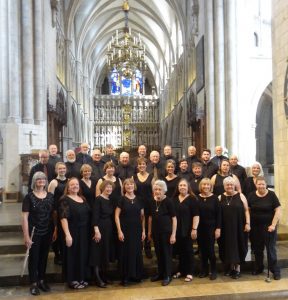
Trinity Choir Pilgrimage to the United Kingdom Photos
The Pilgrimage may be over, but the memories live on. There are shared Google Photo Albums of the trip. This page provided a link to each shared folder. More will be coming soon. You may need to log into your Google account to view them, or if you don’t have a Google account, you may need to create one.
If you would like to share photos you should be able to upload them into the appropriate shared folder (if Google cooperates).
Please e-mail me at subwaymark@gmail.com if there are any problems.
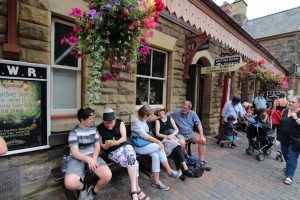
This Album is of all the folks that went on the Trinity Choir Pilgrimage to Worcester and London. Please feel free to add to this album any videos of the choir performances as well as any people images you may have. The more the merrier! If you want me to upload them, please send them to me. at subwaymark@gmail.com If it is a large file (video) we can make arrangements…
Click here for Google Shared Photo Album
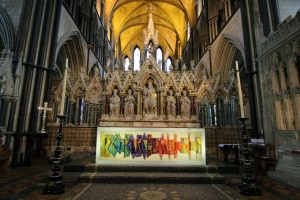
The choir spent one-week singing services at the Cathedral. This included 6 Evensong services and on Sunday Eucharist.
The Cathedral was built in stages from 1084 thru 1504.
Click here for Google Shared Photo Album
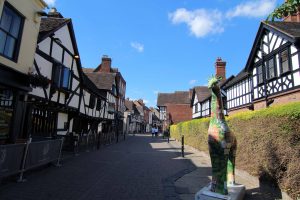
Worcester grew up around the Cathedral. The population of the city is just over 100,000 people. It is famous for being the location of the final battle for the English Civil War in 1651. IT was a walled city, with much of the city wall is still visible. The city is along the River Severn, and also has an active canal running through it. The album also includes images from the various museums in the city
Click here for the Google Shared Photo Album
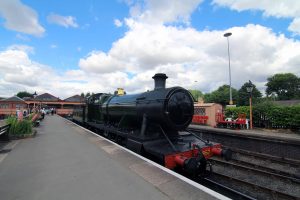
This heritage Railway is a 16-mile long line from Kidderminster to Bridgnorth. The line opened in 1862 and became part of the Great Western Railway. The line was never a financial success. The line was closed in sections in the 1960s as part of the “Beeching Cuts” when many rail lines in the UK were closed. The final passenger train ran in 1970. The current Heritage Railway was formed in 1967 to preserve the closed sections of the railway. The railway as we know it today started running in 1984.
Click here for Google Shared Photo Album
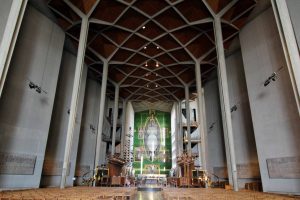
This awe-inspiring cathedral keep ties to the past with a look to peace for the future in a sacred space. The shell of the bombed out cathedral is attached and reflected against the new cathedral. The original cathedral (Actually the second one on the site) was built in the 14-15 Century but destroyed on Nov. 14, 1940, during the Coventry Blitz. The new cathedral opened in 1962. Dr. Paul Klemme (with Patrick’s help) was able to play the fabulous organ here during our visit.
Click here for Google Shared Photo Album
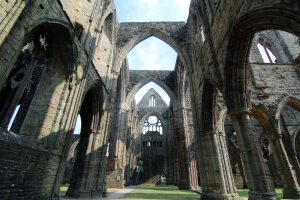
The Wales side trips consisted of stopping at Tintern Abbey, Cardiff, through Brecon Beacons National Park and finally at Hay-on-Wye.
Tintern Abbey was founded in 1131. The Cistercian Monks live there following the Rule of Saint Benedict. Most of the abbey seen here today is from the 1200s. The Abbey fell into ruin after the dissolution of the Monasteries in the 16th Century.
Cardiff history spans 6000 years. The current Cardiff Castle was built on top of a Roman fort from around 54 AD. The Norman Castle seen today was built in the late 11th Century. Cardiff is a busy port city and the capital of Wales.
Brecon Beacons National Park is one of 3 national parks in Wales. It became a national park in 1957. The park covers 519 sq-miles. It is noted for is grassy moorland grazed on by mountain ponies and sheep.
The final stop at Hay-on-Wye is noted for its multitude of used book stores. It started as a market town right on the Welsh border.
Click here for Google Shared Photo Album
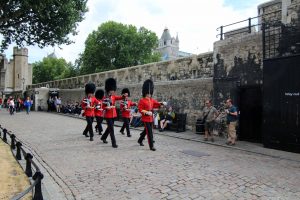
The largest city in the UK was the choir’s base for one week, staying at the Melia White House Hotel. London is a busy large city with a very long history that could take a lot to cover here. Suffice it to say, London has a lot to offer. The images here are mostly of the one-day whirlwind tour of London the choir took. Feel free to add images of any of your excisions around the city.
Click here for Google Shared Photo Album
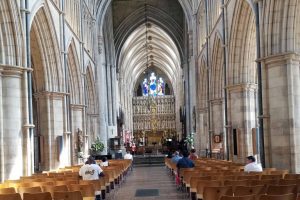
This Cathedral, just south of The Thames more formal name is The Cathedral and Collegiate Church of St. Saviour and St. Mary Overie. It built from 1106 through 1897. The choir sang a one hour concert to an SRO house! Our travel agency, Tumlare, had done some marketing at our concert, which probably helped!
Click here for Google Shared Photo Album
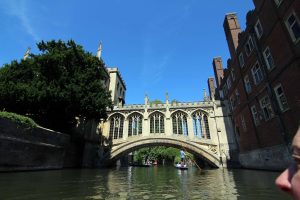
This is a university city along the banks of the River Cam. There are many famous buildings in this city, not the least of which is King’s College Chapel. It is a busy city with a lot of bicycles. Just try to avoid the public restrooms by the main punting boat docks.
Click here for Google Shared Photo Album
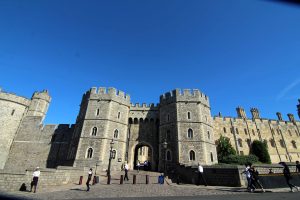
This was a busy day for those on this optional tour of 3 significant places. Windsor, the home of the Queen and the oldest royal castle in continuous use. Stonehenge, a druid stone circle whose mysteries still perplex modern scientists. Lastly Salisbury with its magnificent cathedral. It also has the best copy of the Magna Carta, of a total of 4 remaining copies.
Click here for Google Shared Photo Album
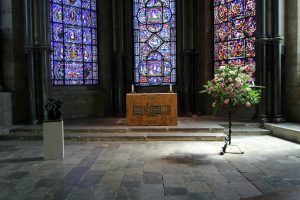
The final side trip and concert for the choir. Canterbury Cathedral is the mother church for the Anglican Communion. The choir was able to perform a casual 30 minute a capella concert in this sacred space. The Cathedral is one of the oldest in England and is a World Heritage site. It was founded in 597. The cathedral was built, rebuilt and expanded many times. The last major alteration was in 1834. IT was lucky not to suffer serious damage in WWII, unlike the city. The Cathedral is currently undergoing refurbishment.
Click here for Google Shared Photo Album